
The article discusses the growing strategic importance of the undersea domain and the technologies transforming subsea defence, as governments invest more heavily in underwater power, navigation, sensing, autonomy and communications. The article highlights companies included in the MTR100 that are developing technologies to improve maritime domain awareness and protect critical subsea infrastructure.
A major focus is the shift toward persistent underwater surveillance rather than occasional seabed surveys. Improvements in sonar, underwater imaging and autonomous systems are allowing operators to monitor larger areas of the ocean more continuously, while advances in navigation are helping underwater vehicles operate accurately even in GPS-denied environments.
Canadian firm Kraken Robotics has emerged as a global leader in synthetic aperture sonar (SAS). Its KATFISH system, integrated with a Towed Synthetic Aperture Sonar (TSAS), is already in use with multiple navies for MCM and change detection, providing unmatched resolution and area coverage rates.
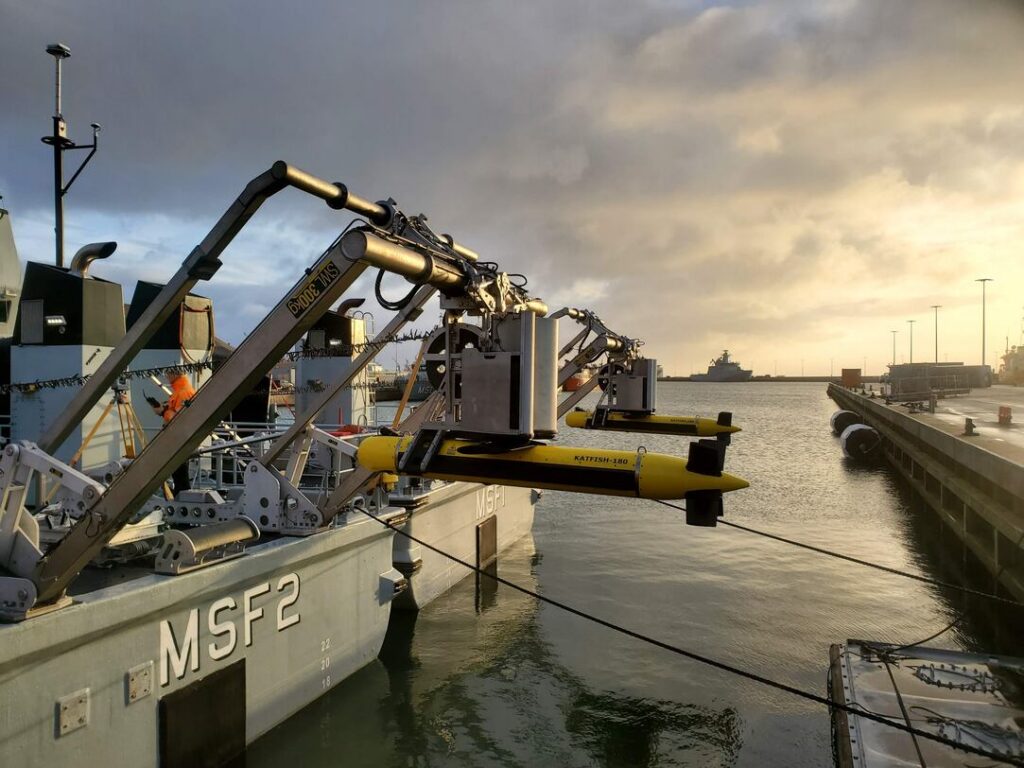
It also examines how autonomous and unmanned underwater systems are changing maritime defence by increasing operational coverage while reducing costs. Long-endurance AUVs, ROVs, autonomous surface vessels and resident underwater drones are increasingly being combined with advanced sensors and communications systems to create more connected and persistent underwater networks.
Collaboration between technology companies, research organizations and defence organizations is also identified as an important driver of innovation. Groups such as COVE are helping companies test and refine ocean technologies and transition commercially developed solutions into defence applications.
Overall, Kraken Robotics is one of the companies helping shape the next generation of subsea defence, particularly through its advanced sonar and seabed-surveillance capabilities. It concludes that advances in power, navigation, sonar, autonomy and communications are creating an underwater environment that is increasingly connected, persistent and resilient, providing greater situational awareness as subsea security threats evolve.