
The Podcast discusses Canada’s growing need to strengthen its underwater defence and surveillance capabilities, with Newfoundland and Labrador emerging as an important centre for this technology. The episode features David Shea, CTO of Kraken Robotics, and General Rick Hillier, former Chief of the Defence Staff, who discuss why understanding and protecting Canada’s underwater domain is increasingly important for national sovereignty, Arctic security and Canada’s relationships with its allies.
He describes Kraken’s approach as taking high-end military technology and making it commercially viable, rather than developing highly specialized systems for a single defence customer. He says the company wants to create technologies that can serve both military and commercial markets, creating export opportunities while allowing the technology to be developed and proven through multiple applications.
The ambition is really to be the world leader in subsea and seabed intelligence. We are a highly technical focused company. One of our mantra’s internally is ‘Innovate or Die.’ We really try and drive forward technological innovation in everything that we do.
A major focus is Kraken’s Synthetic Aperture Sonar (SAS) technology. Shea explains that Kraken’s sonar can create extremely high-resolution images of the seabed from relatively small underwater vehicles, allowing operators to distinguish objects on the seafloor.
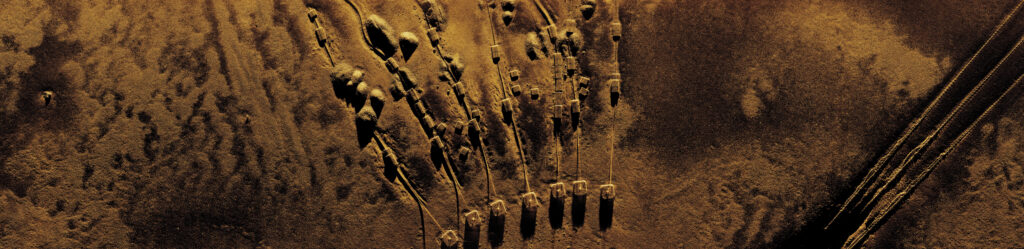
Most of our business is in mine countermeasures/mine warfare. Being able to identify these objects and really give operators/navy sailors the ability to say ‘yes, that’s a mine, we need to dispose of it,’ or ’no, that’s just a piece of something natural that we don’t have to do anything about.’
Shea also emphasizes the importance of reliability because Kraken’s technology is being used in real operational environments. He says, “if it doesn’t work, it gets left on the pier.” He explains that sailors and warfighters need to know their equipment will work when they need it, which drives Kraken to thoroughly test and harden its technologies before they are deployed.
They discuss the need for Canada to move faster when developing defence technology. Shea argues that Canada needs to become more comfortable with risk and failure during the development process, because learning from unsuccessful tests can help improve the next generation of technology. He says, “you must go fast. You must take risks. You must be willing to allow some of those things to fail, and we learn from failure.”
General Hillier similarly argues that Canada needs to accelerate its defence investments. He points to the rapidly changing technology seen in Ukraine, saying, “The clock is ticking in Ukraine right now. Every three months, a new generation of drones is introduced into the conflict. We’ve got to be able to match those timelines.” He also stresses the importance of developing technology domestically and working closely with Canada’s allies.
Hillier highlights dual-use technology as an important part of Canada’s defence strategy. This approach can expand markets for Canadian companies and help technologies reach users more quickly.
Newfoundland and Labrador could be a potential defence-technology hub. Shea says the province has a unique combination of geography, challenging North Atlantic testing conditions, skilled people and academic institutions. He argues that these factors position Newfoundland to develop and export advanced defence technologies around the world.
Overall, Kraken Robotics is an example of how Canadian companies can develop world-class defence technology from Newfoundland and Labrador. It connects Kraken’s subsea sonar and intelligence capabilities to the broader need for Canada to understand and protect its waters, underwater infrastructure and Arctic approaches. The central message is that underwater awareness is no longer simply a defence issue, it is increasingly connected to Canadian sovereignty, economic security and international competitiveness.
Article: Defending the Deep: Securing Canada’s Underwater Sovereignty | Disruptors