Client: Deep Ocean / AkerBP
Location: Norway
Kraken Robotics was commissioned by Deep Ocean, on behalf of AkerBP, to perform a sub-seabed survey at the Symra and Solveig oil and gas fields in the central North Sea. The survey was required to determine the best location for future oil and gas structure foundations, which can be impacted by buried boulders. In the early stages of planning for an offshore oil and gas installation, it’s most efficient to understand the geology and lithology of the sub-seabed before beginning installation. If boulders are found, the site can be relocated early in the process, avoiding significant costs and delays. Kraken was instructed to survey the area and identify buried boulders greater than 0.2 meters in size
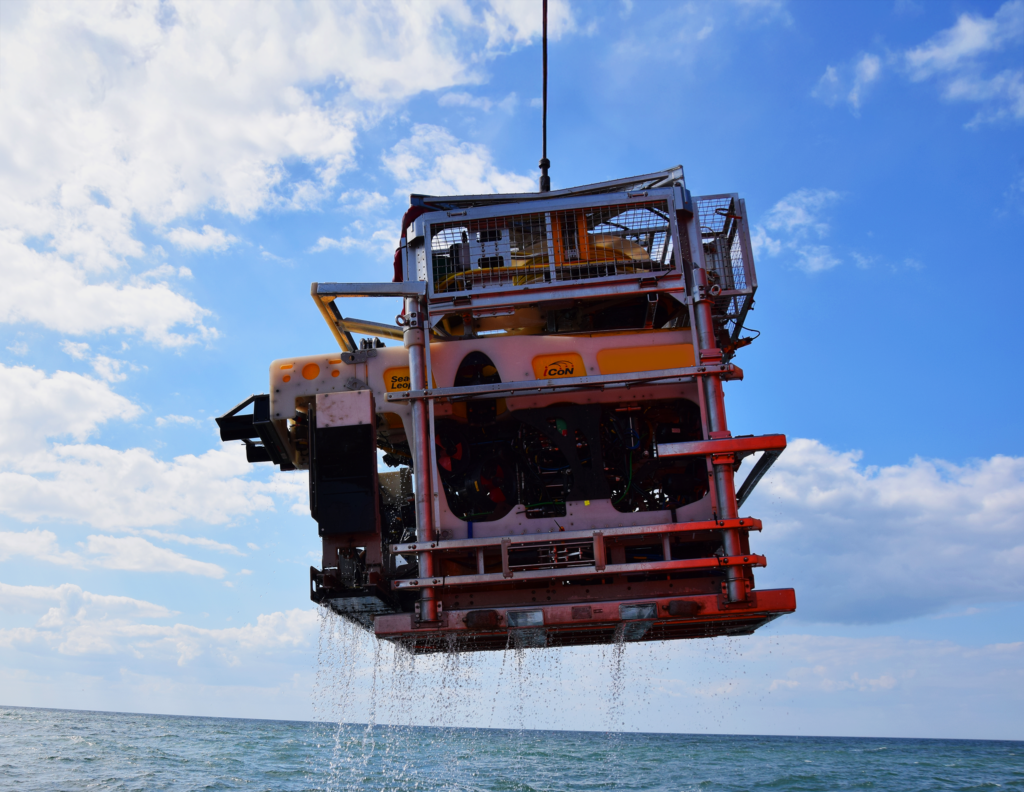
Kraken Robotics utilized its Sub-Bottom Imager (SBI), mounted beneath a Work-Class Remotely Operated Vehicle (WROV), to complete the sub-seabed survey. The configuration enabled the system to be deployed close to the seabed while maintaining consistent coverage across each survey area.
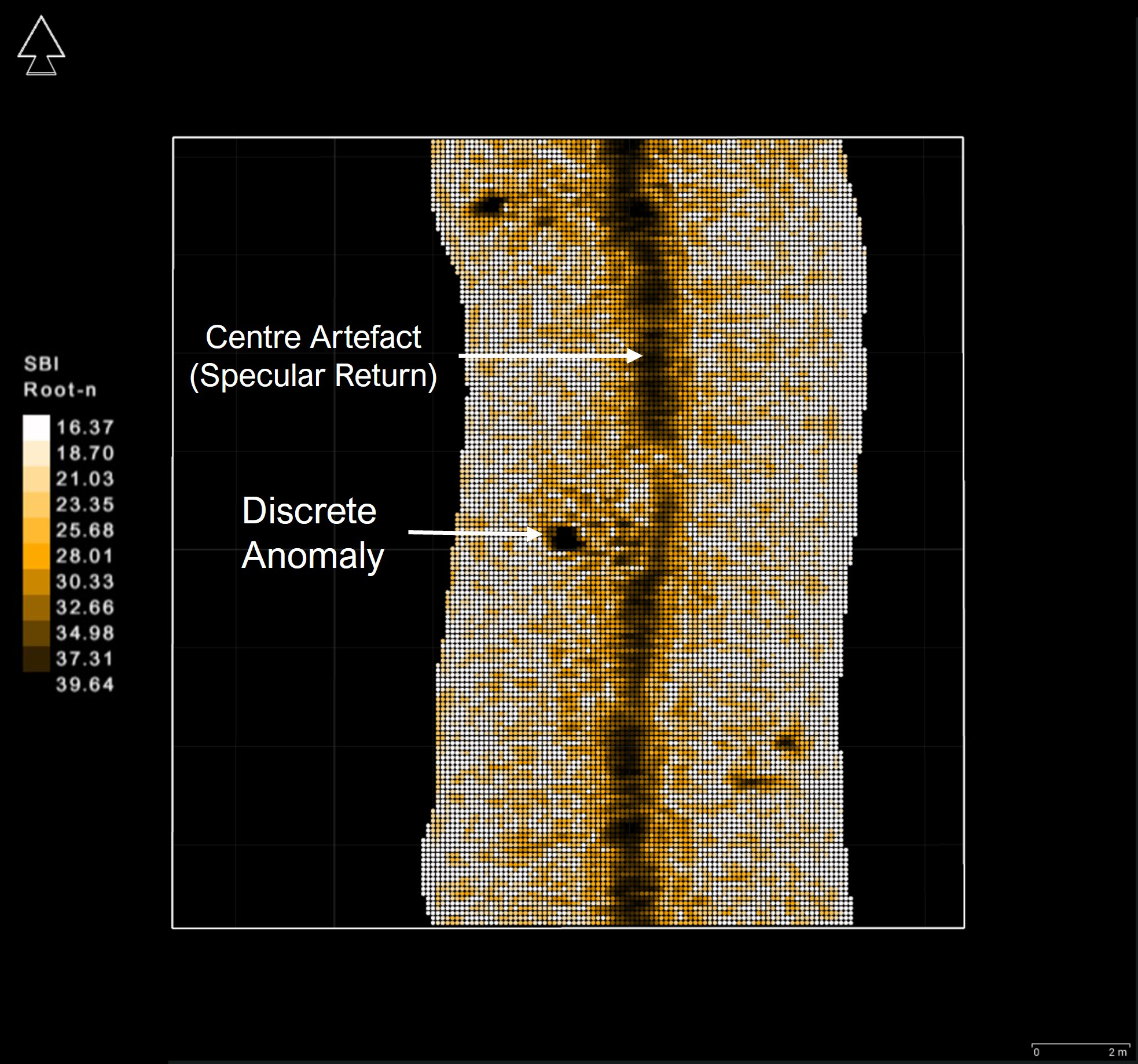
The SBI produced a high-resolution 3D acoustic volume of the seabed and shallow subsurface, allowing the survey team to detect, map, and assess acoustic anomalies indicating the potential presence of buried boulders. This provided greater insight into features that could not be identified through surface imaging alone.
Survey operations were completed across three sites at a water depth of approximately 230 metres. In total, the team acquired 124 survey lines covering 42.9 kilometres over five days, producing a detailed dataset to support further assessment of the proposed installation areas.

Figure 1 - Plan view of the SBI data showing an identified discrete anomaly
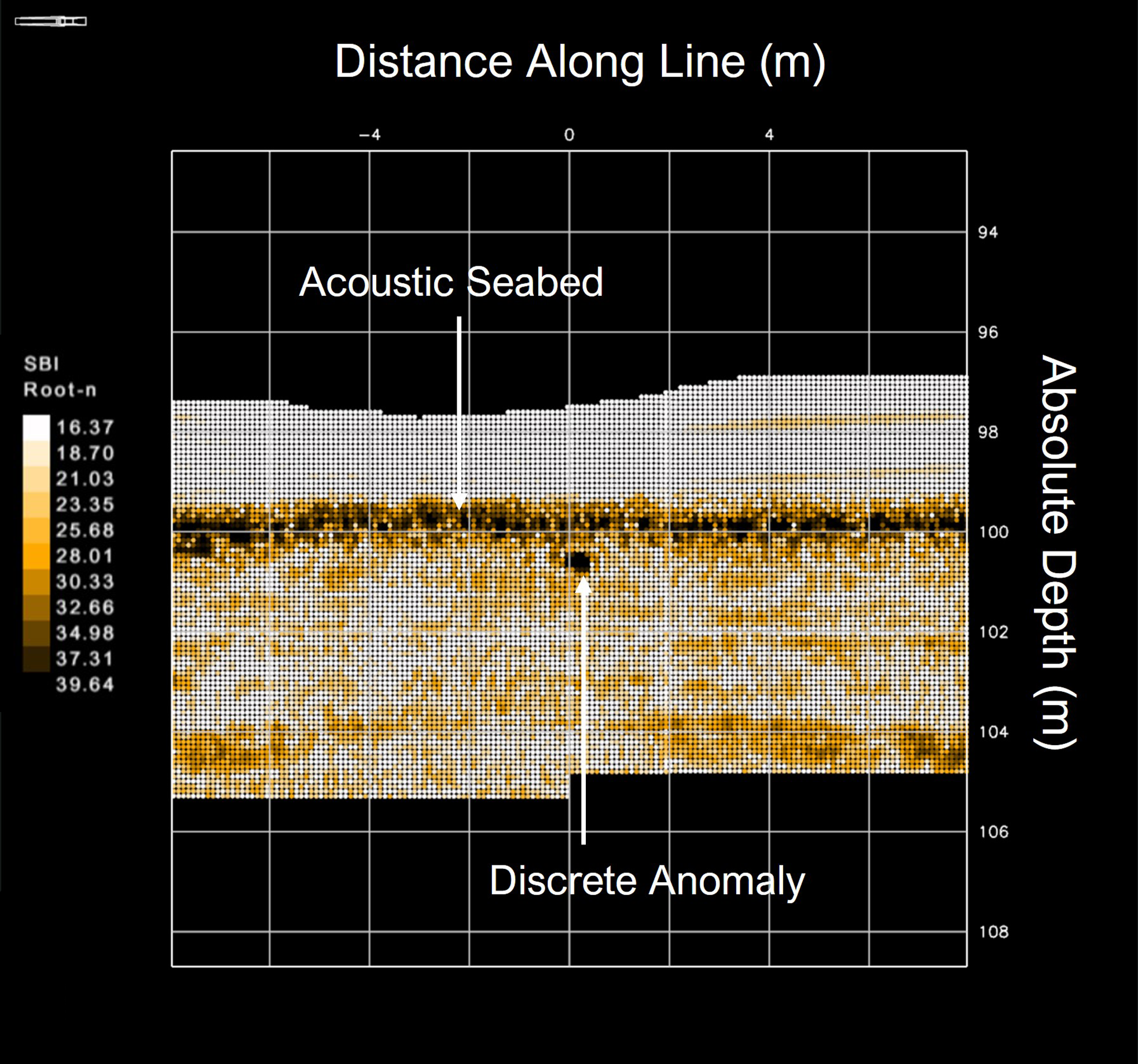
Figure 2 - Profile view of the SBI data showing an identified discrete anomaly

Kraken provided Deep Ocean with a discrete anomaly listing for each survey area, detailing the location, depth, length and width of the anomalies as well as the shape and suggested interpretation (often buried boulders).

Kraken also identified and interpreted lithological boundaries which could hinder infrastructure emplacement, delivering isopach (depth) maps to the client. Seg-Y files were also provided so further analysis could be undertaken by the client.
Using Kraken’s SBI data, Deep Ocean was able to quickly determine the best location for the oil and gas installation, ensuring the project could progress on schedule and within budgets.